Konkrete Ausgangslage
Der Use Case lohnt sich, wenn wiederkehrende Aufgaben heute manuell geprüft, kopiert, beantwortet oder zwischen Systemen weitergereicht werden.
 ConsultingServices.aiAI Consulting for SMEs
Use Case in Detail
In the battle for skilled workers, speed is crucial. Don't spend hours manually reviewing resumes or sending standard follow-up questions. AI-powered systems screen applicant profiles in seconds, conduct initial screenings via chat/phone, and drastically accelerate the onboarding of new employees.
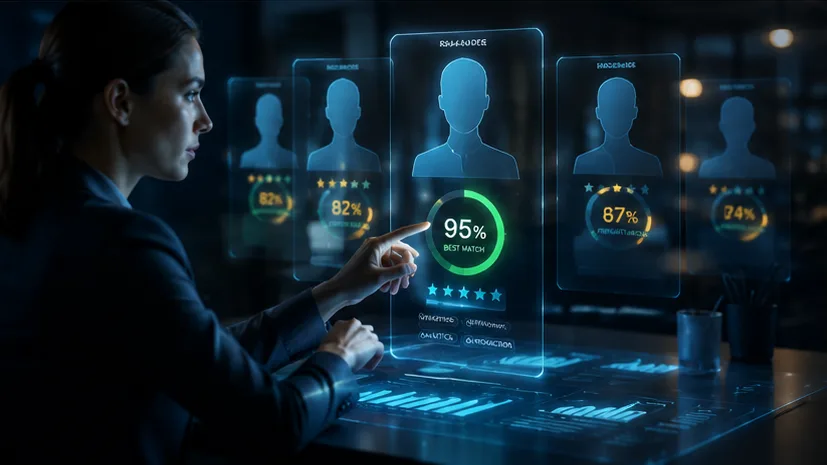
An AI-powered HR system automatically extracts data from PDFs, conducts initial pre-screening interviews with candidates via voice or text agents, and consolidates all documents and training videos into an internal onboarding bot for new employees.
Less suitable if: You only make 1-2 hires per year and everything is very familial, or your candidates are absolute "C-level executives," where only headhunter direct approaches work.
The Solution in Practice
Passive Sourcing: The AI optimizes job postings for target audiences and generates high-converting social media campaigns to automatically fill your pipeline.
Active Sourcing (Co-pilot Approach): An AI system analyzes a large number of publicly available candidate profiles and drafts highly personalized outreach messages. The human retains control but scales their output significantly.
Important (Data Protection & GDPR): Fully automated cold outreach (without consent) by bots is prohibited. The AI must not contact candidates independently. The system acts solely as a "co-pilot" – it prepares and evaluates, the recruiter validates the draft and initiates contact manually.
As applications, CVs, or PDFs arrive, the AI takes over intelligent parsing. It reads unstructured documents in a structured manner and matches them against your requirements.
Automatic Matching of "Must-Haves": Mandatory criteria (e.g., CNC knowledge, willingness to travel) are validated directly. Candidates are automatically categorized into A, B, or C matches. Open knockout criteria can even be queried in advance by an AI assistant via chatbot (e.g., via WhatsApp or web chat) in self-service. HR professionals thus focus 100% on the highly qualified A candidates.
New team members have thousands of routine questions in the first weeks: "Where do I submit the vacation request? Where can I find form X?". An internal corporate AI assistant, trained with your company manuals, answers these directly and 24/7, significantly relieving long-standing colleagues.
Have certified candidates called before the competition reacts? We show you the right AI tools for your HR system.
Vertiefung
Damit ein Use Case nicht nur interessant klingt, muss er in Prozessvolumen, Datenlage, Risiko und messbarer Wirkung übersetzt werden.
Der Use Case lohnt sich, wenn wiederkehrende Aufgaben heute manuell geprüft, kopiert, beantwortet oder zwischen Systemen weitergereicht werden.
Der wirtschaftliche Hebel entsteht meist aus eingesparter Bearbeitungszeit, weniger Fehlern, schnellerer Reaktionszeit und besserer Auslastung vorhandener Teams.
ROI-Beispiel
Das entspricht rund 24.000 EUR manuellem Jahresaufwand. Bei 30 Prozent Entlastung entsteht ein rechnerisches Potenzial von ca. 7.200 EUR pro Jahr.
Die tatsächliche Wirtschaftlichkeit hängt von Prozessvolumen, Datenqualität, Integrationsaufwand und Freigabeanforderungen ab.